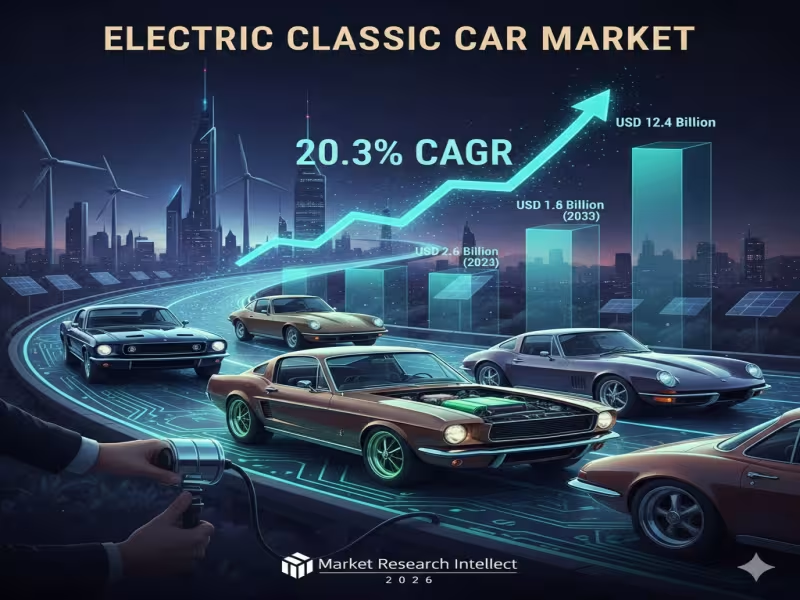
SHERIDAN, WYOMING - January 6, 2026 - Market Research Intellect has published a new outlook for the Electric Classic Car Market, projecting rapid expansion as electrified powertrains move from niche restoration projects into more structured, professionally delivered conversion offerings. The report estimates the market at USD 2.6 billion in 2024 and forecasts growth to approximately USD 12.4 billion by 2033, reflecting a 20.3% CAGR from 2026 to 2033. For automotive suppliers, conversion specialists, and mobility investors, the projections highlight a tightening link between emissions compliance, premium customization demand, and an expanding ecosystem of parts, software integration, and aftersales support.
Growth Outlook and Commercial Implications
The forecast signals a shift in electrified heritage vehicles from enthusiast-led builds toward repeatable, service-led conversion models. Market Research Intellect frames this expansion around improving technology maturity and increasing end-market acceptance, supported by rising investment and global demand for sustainable classic mobility solutions. If the market reaches the projected scale, the segment may become more relevant for specialist engineering firms, high-end aftermarket providers, and premium mobility operators looking to monetize differentiated vehicle experiences.
The report positions electrified classic vehicles as a way to preserve vintage aesthetics while aligning with modern environmental expectations. In operational terms, this expands the addressable market beyond collectors into buyers seeking daily usability, lower maintenance profiles, and compliance-friendly access in regulated urban environments.
Regulation, Incentives, and the Compliance Angle
A key driver in the report is the role of environmental regulations and policy mechanisms that favor zero-emission vehicles. Market Research Intellect points to emission norms, urban low-emission zones, and government incentives as tailwinds that can accelerate classic car electrification. For conversion businesses, regulatory clarity can reduce project risk by improving predictability around certification and road legality, which in turn supports scaled marketing, financing, and standardized delivery.
From an OEM and supplier perspective, the regulatory direction also increases the value of "conversion-ready" components-battery packaging approaches, thermal management, and integration methods that can be adapted across multiple legacy platforms without extensive one-off engineering.
Technology Enablers Behind Conversion Scalability
The report attributes continued adoption to advances in battery technology, including improvements in energy density and system management, and to broader progress in electric motors and integration software. These developments can reduce conversion complexity and improve reliability in older chassis, enabling more consistent outcomes across different vehicle models. Market Research Intellect also highlights features that are increasingly expected in premium conversions, such as regenerative braking and modern drivability characteristics that differ from internal combustion classics.
For operators, the practical takeaway is that conversion timelines and long-term serviceability become central differentiators. As standardization increases, the market can support clearer service models-diagnostics, upgrades, and battery lifecycle planning-rather than treating each build as a bespoke engineering program.
Competitive Landscape and the Emerging Value Chain
Market Research Intellect lists key companies active in the space: Lunaz Design, Electric Classic Cars, Zero Labs Automotive, Everrati Automotive, RBW EV Cars, Charge Cars, Retro EV, and Icon Electric Vehicles. The report also describes an expanding ecosystem that includes conversion companies, battery suppliers, software integrators, and restoration workshops. Strategic partnerships across this value chain are positioned as a mechanism to improve quality and scalability, while training programs and certification standards can help reduce safety and compliance variability.
As the ecosystem matures, firms may compete less on "whether electrification is possible" and more on execution quality: repeatable integration, predictable performance, and durable aftersales support.
Segment Structure and Use-Case Expansion
The report segments the market by type and application. By type, it includes Fully Electric Conversions and Hybrid-Assisted Classic Vehicles. By application, it includes Personal Ownership, Commercial & Rental Services, and Automotive Exhibitions & Events. For B2B decision-makers, the commercial and rental segment is notable because it links conversions to revenue-generating experiences such as luxury tourism and heritage mobility services, potentially widening demand beyond private collectors.
Geographic Momentum and Market Leadership
Market Research Intellect states that Europe currently dominates the Electric Classic Car Market, citing stringent emission regulations, strong classic car culture, and established EV infrastructure, with countries such as the UK, Germany, France, and the Netherlands highlighted as being at the forefront. North America is presented as a close follower, driven by a strong collector base and increasing interest in sustainable luxury vehicles, particularly in the United States. The report also describes Asia-Pacific as emerging, led by Japan and Australia, alongside niche luxury demand in the Middle East.
For industry participants, the geographic view reinforces that go-to-market strategies may need to be region-specific, reflecting differences in regulation, EV readiness, and buyer profiles.
Learn more at https://www.marketresearchintellect.com/