SHERIDAN, WYOMING - December 8, 2025 - The Philippines is stepping up its outreach to China's travel industry with a dedicated e-visa training roadshow, as Manila moves to make short-stay tourism and business travel easier and more predictable for Chinese visitors - and to give tour operators, OTAs and consolidators a clear operational playbook ahead of the next wave of demand.
Shenyang Training Puts Front-Line Travel Sellers in Focus
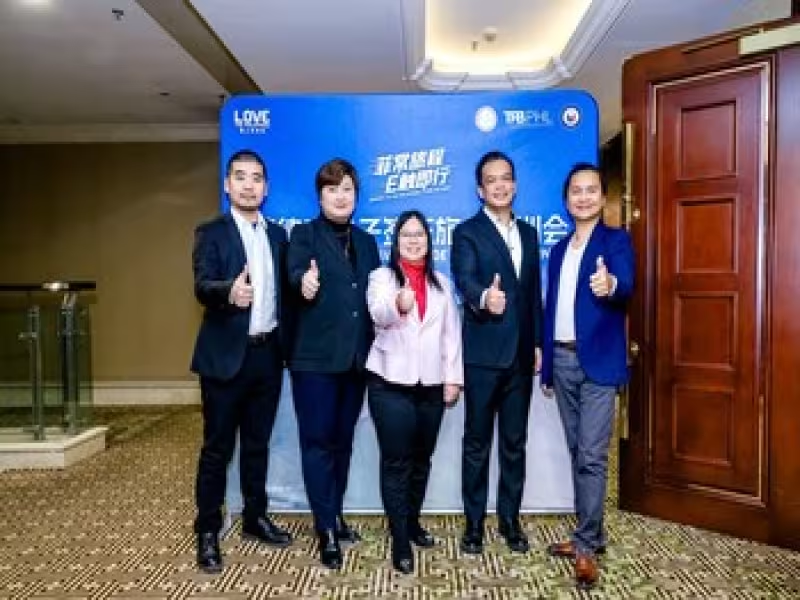
In Shenyang, the Philippine Embassy in China and the Philippine Department of Tourism (PDOT) co-hosted the "菲常旅程,E触即行" e-visa training for the local travel trade, drawing agency representatives and distribution partners from across the region. The session served both as a policy briefing and as a hands-on workshop, designed to ensure that front-line sellers understand eligibility, processes and system workflows.
Key officials on site included Third Secretary and Vice Consul Diane Merce Bartolome of the Philippine Embassy, PDOT Beijing Tourism Attaché Ireneo H. Reyes, tourism officer Ernesto Teston, and Rebecca Zhang, City Manager Shenyang for VFS Global, the Philippines' e-visa service partner. Together, they outlined how the upgraded digital visa channel fits into Manila's broader strategy to rebuild and diversify arrivals from China.
New E-Visa Rules: Clear Parameters for Short-Stay Travel
In her opening remarks, Bartolome traced the evolution of the e-visa policy and positioned it as both a sign of Manila's "continued openness" to Chinese visitors and a milestone in bilateral relations. Under the latest rules, Chinese citizens visiting the Philippines for tourism or business, with stays of up to 14 days and no extension, can submit e-visa applications via an online platform and enter through Ninoy Aquino International Airport in Manila or Mactan-Cebu International Airport.
For agencies and corporate travel managers, this creates a clearly defined product: short-stay trips with fully digital pre-clearance and predictable entry points. Bartolome stressed that the system is designed not just to simplify applications, but to show that the Philippine government is "determined to improve the visitor experience" through streamlined, technology-enabled processing.
Destination Pitch: Infrastructure, Product Depth and Rebounding Demand
Reyes used the training to update the trade on the Philippines' destination offering and infrastructure improvements. Since 2023, Chinese arrivals have rebounded and business exchanges have grown, he noted, with PDOT prioritizing diversified tourism products beyond classic beach itineraries. For the trade, that translates into more scope for themed packages - from islands and diving to MICE, family travel and emerging secondary destinations.
By pairing digital entry channels with upgraded airports, transport links and new hotel inventory, the Philippines is positioning itself as a more competitive option in a crowded Asia-Pacific outbound landscape. Participants were encouraged to use the e-visa simplification as a catalyst to refresh their Philippines portfolios and push new itineraries into the market.
VFS Global Showcases End-to-End Digital Workflow
On the operational side, VFS Global's Shenyang City Manager, Rebecca Zhang, walked attendees through the upgraded e-visa platform. The new system offers fully digitalised processing, higher security and a more user-friendly interface, aimed at reducing errors and cutting turnaround times for both individual and group applications.
For B2B partners, this means:
- A single digital channel to manage multiple client files
- Standardised document requirements and status tracking
- Reduced manual handling and fewer in-person visits
- A clearer framework for managing group submissions and peak-season demand
According to organisers, further increases in China-Philippines direct flights are anticipated as visa processing becomes more efficient, which would support both outbound leisure and corporate segments.
Stronger China-Philippines Tourism Ties, Built Through the Trade
The Q&A segment highlighted practical concerns - from team applications to promoting lesser-known Philippine destinations - and underlined the industry's appetite for concrete guidance. Speakers responded with data and case examples, reinforcing that Beijing and Manila see the travel trade as a crucial conduit for turning policy changes into actual bookings.
By giving Chinese tour operators, agents and distribution partners direct access to embassy, tourism authority and VFS experts in one room, the Shenyang training created a high-touch channel for policy clarification and product development. Organisers expect the programme to deepen China-Philippines tourism cooperation, expand the range of Philippine products on offer in China and open a new chapter in people-to-people exchange between the two countries.
For partnership enquiries and further information on Philippines e-visa support, contact TravelLink via caienkai@tlmchina.com or visit tlmchina.com.